Gardnerville Horse Property: Why Water Rights Set the Price
September 24, 2026
September 24, 2026
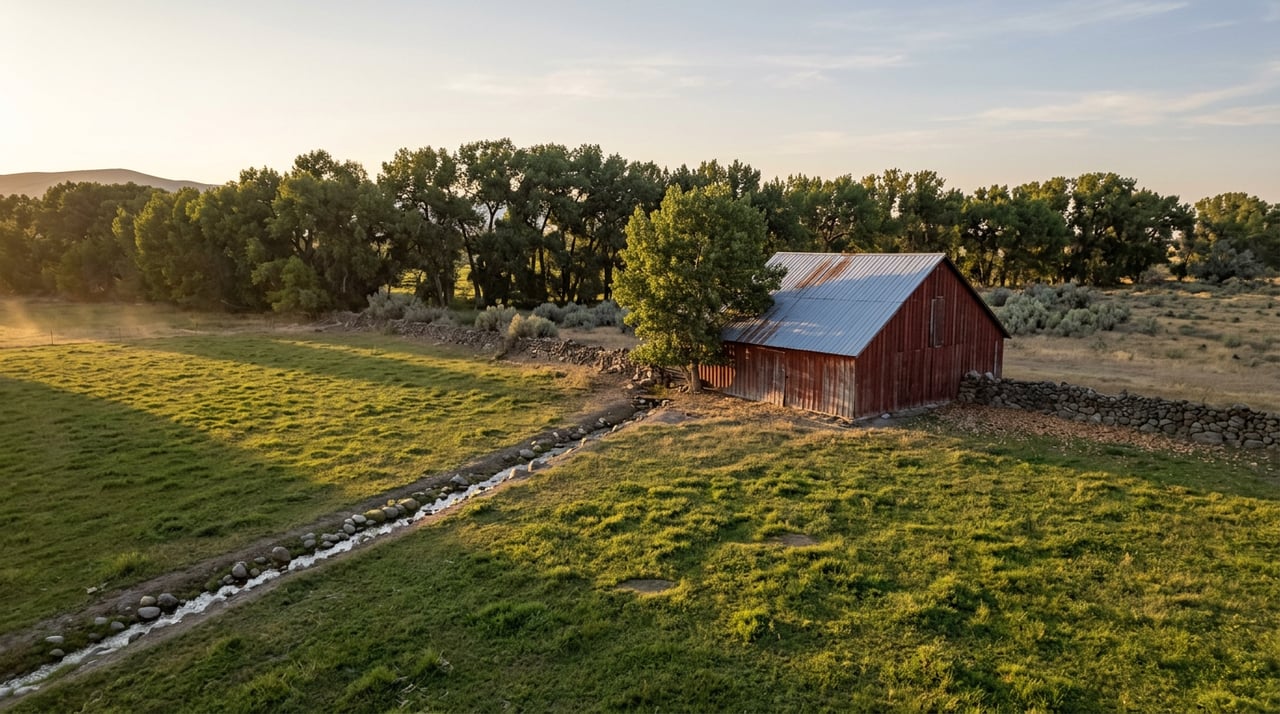
Every year in Carson Valley, somebody falls for the same listing. Five acres, a barn already standing, mountain views out every window, and a price that looks reasonable next to the neighbors. They write the offer. Somewhere in the due diligence period, often later than it should be, they learn the parcel has no irrigation water rights attached to it. That green pasture in the listing photos was green because someone was watering it by hand or because the photos were taken in April. By July, in a Nevada high desert summer, that same ground goes to dust, and the horse property they bought can't actually support a horse.
This isn't a rare mistake. It's common enough that anyone who works acreage in Gardnerville, Minden, or the rest of Douglas County has a version of this story. And it points to something buyers consistently get backward when they shop for land here: they price the parcel by the acre, when the acre is almost never the thing that determines value or usability. Water rights are.
Look at what horse and equestrian-marketed land was fetching in Gardnerville compared to the rest of the market. As of mid-July 2026, active NNRMLS listings told a clear story.
| Segment | Active listings | Median asking price |
|---|---|---|
| All active Gardnerville listings | — | $745,750 |
| Listings marketed as horse or equestrian property | 35 | $1,024,900 |
| Premium | — | $279,150 |
A quarter of a million dollars, roughly, separates a generic Gardnerville listing from one marketed for horses. That gap isn't explained by square footage or lot size alone. Plenty of five and ten-acre parcels in the valley sit well below that equestrian median because the acreage is dry rangeland with no irrigation attached, useful for a view and not much else. The premium tracks with whether the land can actually grow pasture, and pasture in a high desert valley depends entirely on whether water gets delivered to it.
Nevada divides water into a few categories that matter differently depending on what you plan to do with a property. Surface water rights let you draw from a river, stream, or irrigation ditch for household or agricultural use. Groundwater rights govern what you can pull from a well. Irrigation rights are the specific allocation that lets you flood or sprinkler a pasture rather than just water a garden bed. A parcel can have one of these, all three, or none, and the listing sheet doesn't always spell out which.
The Nevada Division of Water Resources oversees this system through the State Engineer's office, and every water right in the state is tied to a specific parcel, a specific priority date, and a specific beneficial use. That last part matters more than people expect. A right that was appropriated for irrigating alfalfa decades ago doesn't automatically transfer to a new owner's plan to run three horses on the property. Confirming that the water right is both real and appropriate for your intended use is its own step, separate from confirming that a water right exists at all.
This is why the acreage number on a listing tells you almost nothing about what you can do with the land until you know what's attached to it. A dry ten acres and an irrigated ten acres are functionally two different products, even though they'll appear identical on a map.
Not all of Gardnerville's acreage carries equal odds of having working water rights. The parcels most likely to have functioning irrigation sit in a handful of recognizable pockets: Gardnerville Ranchos, the Fish Springs area, Johnson Lane, and the valley floor south toward Minden. These areas developed around agricultural use going back generations, which is exactly why the water infrastructure, ditches, headgates, and allocations, already exists there in a way it doesn't on land that was subdivided later without an agricultural history.
You can see the working end of this in the valley's active equestrian businesses. Sheridan Creek Equestrian Center, on Centerville Lane in Gardnerville, boards horses and runs lessons on ground that supports real pasture. Rock-A-Bye Ranch, also in Gardnerville, runs a hunter and jumper training program with grass turnouts that need consistent water to function through the season. Cottonwood Creek, one of the valley's longer-running boarding operations, sits close enough to BLM land that its horses have trail access stretching toward Fish Springs and Carson City. None of these operations are viable on rangeland with no irrigation. Their presence is a signal about where the water actually is, not just where the zoning allows animals.
If you're shopping acreage in Gardnerville with horses, hay, or any kind of agricultural use in mind, the water rights question needs to be settled before you write an offer, not during it. A few things worth confirming early:
A standard Nevada purchase contract typically gives you a due diligence window.
People talk about Carson Valley's town-by-town price differences as though the town itself explains the gap, Genoa costing more than Gardnerville, Minden sitting in between. There's some truth to that at the surface level. But inside Gardnerville alone, the difference between an irrigated parcel with real water rights and a dry parcel of the same size is often a bigger swing than the difference between towns. The zip code tells you less than the deed does.
That's the piece worth sitting with if you're comparing acreage listings on paper. The photo of green pasture, the acreage figure, the barn already built, none of it confirms the one thing that determines whether the property works the way you're picturing it. Only the water right does that.
Can I add irrigation water rights to a parcel that doesn't currently have any? Sometimes, through the State Engineer's application process, but it isn't guaranteed and it isn't fast.
Does every acreage listing in Gardnerville disclose whether water rights are included? Not consistently. Some listings state it plainly, others leave it for the buyer to ask. Treat the absence of a clear statement as a reason to ask directly rather than an assumption in either direction.
Is a well enough for a small hobby horse setup without full irrigation rights? Growing and maintaining pasture at scale generally requires irrigation water.
If you're weighing a horse property purchase in Gardnerville, Minden, or anywhere else in Carson Valley, the acreage figure is the easiest number to find and the least useful one to lean on. Kari Breuer has spent 25 years working this valley's land, its water, and its zoning quirks, and can walk you through what a specific parcel actually carries before you're the one standing in a dry pasture come July. Let's Connect.
This article is general information, not legal, tax or financial advice. Consult a qualified professional about your situation.
October 15, 2026
October 8, 2026
October 1, 2026
September 24, 2026
September 17, 2026
September 10, 2026
September 3, 2026
August 27, 2026
August 20, 2026
Whether it's your first home or your fifth, I'd love to help.
Kari Breuer
Broker-Salesperson
NV BS.0146614
(775) 450-3431
[email protected]
308 N Curry St Ste 101 Carson City, NV 89703